High Frequency radio waves Propagation
High Frequency (HF) radio propagation is the behavior of radio waves (3 MHz to 30 MHz) that bounce off the Earth's ionosphere for long-distance communication. vsTASKER is a software tool used to simulate how these waves physically interact with the environment.The relationship between HF radio wave propagation and vsTASKER centers on how the software mathematically models this behavior:How vsTASKER Models HF PropagationEnvironmental Data: vsTASKER uses real-world geographic data (like mountains, cities, and oceans) to calculate physical signal loss.Atmospheric Physics: The software accounts for weather, emitting power, and radio frequencies to determine if a signal will make it to a receiver.Performance Metrics: It evaluates signal strength (RSS) and signal-to-noise ratio (SNR) to predict how well your equipment will work in a specific setup.Real-World HF Propagation DynamicsSkywave Bouncing: HF waves travel by bouncing (refracting) off the ionosphere. This allows the waves to travel past the curve of the Earth and over thousands of miles.Solar Dependence: The ionosphere changes constantly based on the sun. This means HF propagation changes between day and night, requiring frequency adjustments to maintain a connection.Terrain Blocks: Even though HF waves go far, obstacles like tall mountains still cause signal shadowing and attenuation, which software like vsTASKER is designed to predict.If you are looking to test a specific system, let me know:What geographic region are you simulating?What power and frequency do your radios use?Are you looking to study military communications or amateur radio?I can help you adjust your propagation model variables.
The relationship between High Frequency (HF) Radio Wave Propagation and vsTASKER centers on advanced tactical simulation.vsTASKER is a powerful computer-aided military and defense simulation software developed by VirtualSim. It is widely used to test and qualify the behavior of high-frequency radio waves (3 MHz to 30 MHz) traveling across complex 3D environments, such as mountainous terrain or varying atmospheric conditions.How vsTASKER Models HF PropagationWhen simulating HF radio wave propagation, vsTASKER acts as a central logic engine that processes multiple physical and environmental factors:Terrain Analysis: It models how geographic obstructions like mountains, hills, and valleys cause path loss, diffraction, and terrain occultation (blocking the line of sight).Hardware Profiling: Users can input specific radio configurations—including transmitter power (typically 5 to 50 watts for portable units), selected frequencies, and receiver attributes—to test how hardware limitations affect connectivity.Signal Diagnostics: By computing physics-based attenuation and background noise, vsTASKER calculates the expected Received Signal Strength (RSS) and Signal-to-Noise Ratio (SNR). This qualifies whether portable field equipment will successfully hold a connection.Atmospheric & Environmental Modeling: The software integrates changing atmospheric data, letting instructors simulate how real-world environments impact signal refraction and degradation.
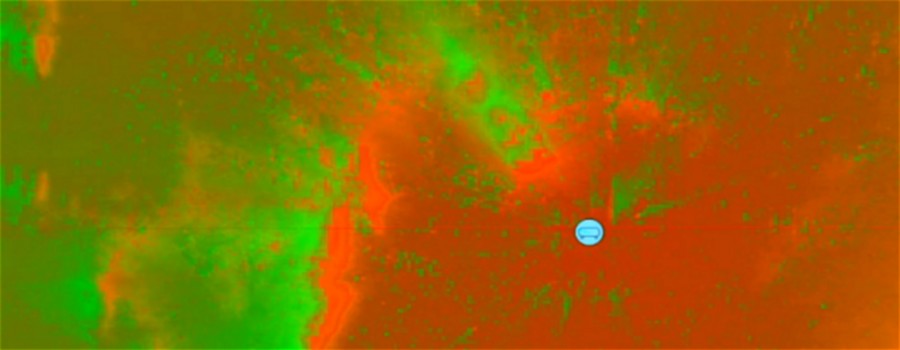
Reference image showing features of vsTASKER
Reference video showing features of vstasker
Use Cases of High Frequency Radio PropagationOver-The-Horizon (OTH) Communication: Vital for long-distance defense, maritime, and aviation operations where satellites cannot be used.Disaster Response: Provides independent, decentralized voice and data links in remote areas when local infrastructure fails.Military/Tactical Resilience: Allows armed forces to maintain communications securely without relying on vulnerable satellite or cellular networks.How vsTASKER Enhances HF Propagation PlanningTerrain Modeling: Projects how HF and lower frequency signals wrap around, bounce off, or get blocked by mountains, hills, and urban structures.Signal Analysis: Computes the Received Signal Strength (RSS) and Signal-to-Noise Ratio (SNR) to predict equipment reception quality.Mission Simulation: Tests and validates portable (5-50 watts) radio setups across specific landscapes or airspaces to ensure effective data transfer.
Downlaod - High Frequency radio waves Propagation
Request for Trial licence
Download User Guide & reference manual
Use Cases in Defense and C4ISRQualifying Telecommunications: It evaluates whether low-powered tactical radios can maintain communication over non-line-of-sight terrain before troops deploy.Distributed Training (HLA/DIS): vsTASKER can link with remote participants using standard military architectures like High Level Architecture (HLA) to execute multi-year synthetic exercises featuring authentic radio behavior.Unmanned Systems Integration: It helps design autonomous logic for UAVs (Unmanned Aerial Vehicles) operating in environments where communication might drop due to radio wave shielding.