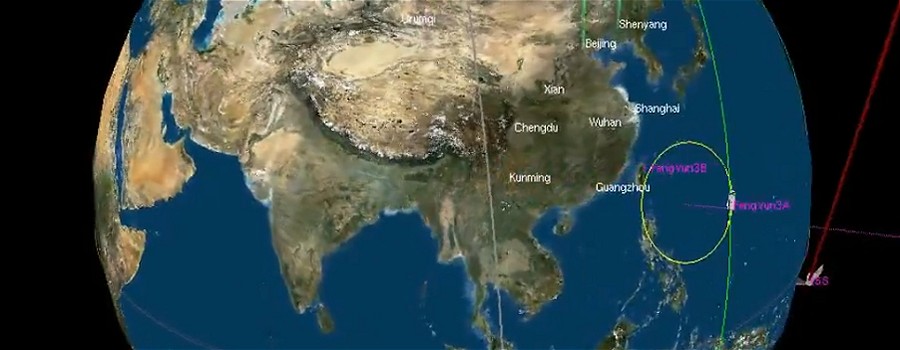
Satellite Communications and vsTASKER represent two very different sides of the space and aerospace industry. Satellite Communications (SatCom) refers to the real-world hardware and networks used for global connectivity, while vsTASKER is a software tool used to simulate, test, and predict how those satellites behave in orbit.Satellite Communications (SatCom)Satellite Communications uses satellites in space to relay signals across the globe. It is the backbone of remote communications, GPS, and global broadcasting.How it works: Ground stations beam signals up to a satellite, which then amplifies the signal and redirects it to another ground station or directly to a user's device.Orbit Types:LEO (Low Earth Orbit): Travels close to Earth (500–2,000 km). Great for high-speed internet and low-latency connections (e.g., Starlink).GEO (Geosynchronous Earth Orbit): Sits very high up (35,786 km) and stays stationary over one spot on Earth. Perfect for television broadcasting and traditional communications.Applications: Military defense, maritime communication, remote internet access, and global navigation.vsTASKERvsTASKER is a professional, node-based simulation software toolkit developed by Virtual Simulation. It allows engineers and military planners to build synthetic environments and test complex scenarios—including how satellites communicate.Satellite Module: vsTASKER features a built-in Satellite Communications module. Users can import orbital data and simulate thousands of satellites in real-time.Testing & Assessment: Instead of launching a satellite to test how well it connects with ground stations, vsTASKER predicts data transfer windows, coverage areas, atmospheric interference, and sun interference on a computer.Scenarios: It is heavily used in defense and aerospace to simulate how satellites interact with ground troops, unmanned drones, or enemy jammers.The Difference at a GlanceFeatureSatellite Communications (SatCom)vsTASKERCategoryPhysical infrastructure and global networking.Software program for simulations and analysis.Primary UsersTelecommunication companies, militaries, and everyday users.Aerospace engineers, defense contractors, and system integrators.PurposeTo connect people, route data, and provide global internet/GPS.To predict orbits, test coverage zones, and analyze communication links.
vsTASKER is a professional simulation software suite used to model, predict, and assess satellite communications. Instead of being opposing or competing concepts, vsTASKER is a tool used to simulate Satellite Communications.If you are evaluating how vsTASKER handles Satellite Communications (often alongside or compared to external tools like STK), here is how the software framework functions in this domain:How vsTASKER Simulates Satellite CommunicationsThe software includes a dedicated Satellite Communications module designed for real-time and fast-time space-based network analysis.Orbit Generation & Propagation: Users can import real-world satellite data using Two-Line Element (TLE) sets from organizations like NORAD. It features built-in SGP4, J2, and Two-Body propagators to accurately calculate the satellite's position in space using Julian time. For classified or customized space objects, orbits can be manually constructed using standard Keplerian elements.Link & Coverage Assessment: The system simulates transmission payloads, signals, and antennas. It calculates ground reception coverage and cross-link capabilities by factoring in physical constraints such as Earth curvature, atmospheric disturbances, sun interference, and terminator lines.Scenario Optimization: Using C++ code generation and a high-performance runtime engine, vsTASKER can execute rapid Monte Carlo simulations and batch processing to test thousands of data-transfer time windows or ground coverage configurations simultaneously.vsTASKER vs. Systems Tool Kit (STK)In the industry, vsTASKER is frequently used alongside or compared to Ansys STK (Systems Tool Kit), which is the industry standard for deep aerospace analysis.FeaturevsTASKER (with Satellite Module)Systems Tool Kit (STK)Primary FocusTactical scenario logic, C++ code generation, and complex synthetic training environments.Deep, high-fidelity physics and geometry analysis for aerospace, radar, and electronic warfare.IntegrationActs as a central orchestrator. It natively connects to STK via LAN, ActiveX, or COM.Primarily acts as the deep analytical engine feeding data to external systems.Use Case SplitvsTASKER runs the macro scenario logic (e.g., changing aircraft trajectories, triggering sensors, or commanding ground stations when a satellite is in view).STK handles the micro-precision physics (e.g., fine-tuning terrain-based sensor detection or precise orbital mechanics).If you are trying to design a simulation framework, vsTASKER is typically selected if you need to generate standalone, lightweight C++ execution logic or integrate satellite links into a broader tactical military/drone trainer.Are you looking to build a specific simulation scenario (like a ground-to-satellite data transfer window), or are you trying to choose between vsTASKER and another software tool?