Sea Motion Integration
vsTASKER is a comprehensive, logic-driven simulation toolkit developed by VirtualSim, used heavily in the defense, aerospace, and maritime sectors."Sea Motion Integration" is not a competing product, but rather an optional integration feature for vsTASKER. It combines the program's mathematical and behavioral logic with a high-fidelity, GPU-based marine simulator. Together, they create a "man-in-the-loop" visual training and research environment.The distinction between the core engine and the marine graphics module is detailed below:vsTASKER (The Simulation Engine)Core Function: Generates C++ code for scenarios, handling entity behavior, artificial intelligence, sensor logic, and movement.Setup: Maps out tactical movements and scenarios on 2D layouts before compiling them into simulations.Customization: Allows users to test thousands of configurations—such as unmanned autonomous underwater vehicle (UAV/UUV) paths, radar detection, and defense tactics.Engine Output: Produces native code that functions independently of the graphical interface.Sea Motion Integration (The Graphical Upgrade)Core Function: Connects the vsTASKER backend to high-fidelity, multi-spectral marine visual rendering systems.Realistic Environment: Replaces simple or flat viewing environments with photorealistic sea states, real-time wave rendering, and underwater visibility.Training Value: Enables "man-in-the-loop" (MITL) simulators where operators can use joysticks or control panels to train in real-time with highly accurate ocean physics.How They Work TogetherTactical Control: vsTASKER handles the invisible "brains" of the simulation, dictating how a ship, submarine, or missile behaves under given conditions.Visual Representation: Sea Motion Integration handles the "eyes," providing the immersive 3D, sensor-accurate view of the ocean and weather conditions the operator sees.If you are looking to build a specific maritime simulator, tell me:What types of vessels (submarines, naval ships, UAVs) are you simulating?Is this for training (man-in-the-loop) or automated analytical studies?I can provide more details on the exact modules and hardware you might need.
SeaMotion Integration and vsTASKER are complementary software solutions rather than direct competitors.vsTASKER is a core, real-time simulation toolkit and scenario engine. SeaMotion Integration acts as a high-fidelity bridging plugin designed to connect vsTASKER's logical environment with multi-spectral, GPU-based marine physics simulators.When combined, they allow engineering teams to build complex, "man-in-the-loop" maritime research simulations.Core Component BreakdownFeature / AspectvsTASKER (The Core Engine)SeaMotion Integration (The Bridging Solution)Primary RoleScenario definition & behavior execution.Hydrodynamic coupling & multi-spectral visual mapping.Logic & RulesUses graphical state machines and automatic C++ code generation.Relies on the underlying vsTASKER architecture to execute ship commands.EnvironmentGenerates 2D maps, tactical tracks, and generic 3D layouts.Renders complex, irregular sea states, wave spectrums, and GPU graphics.Target EntitiesAircraft, sensors, terrain grids, tracking stations, and ships.Strictly focused on maritime vessels, submersibles, and sea conditions.Main Differences ExplainedTactical Control vs. Physics Fidelity: vsTASKER handles what an entity decides to do (e.g., intercepting a target, path-finding around an obstacle, or engaging a sensor filter). SeaMotion calculates how the vessel moves through the water based on real wave spectrum variables, thrust calculations, and hull aerodynamics.Application Scope: vsTASKER is multi-domain and widely deployed for electronic warfare, airspace management, and ground-battle scenario building. SeaMotion is specialized exclusively for defense and academic research targeting complex maritime environments.Architecture: vsTASKER operates as the primary standalone runtime executable or generates embedded DLL files. SeaMotion functions as an operational layer, tethering external high-fidelity ocean libraries to vsTASKER's compiled C++ logic loop.If you are designing a complex naval system, let me know:What specific vessel types (e.g., surface ships, submarines, or UAVs) you are attempting to model.If your focus is primarily on tactical scenario training or hydrodynamic physics research
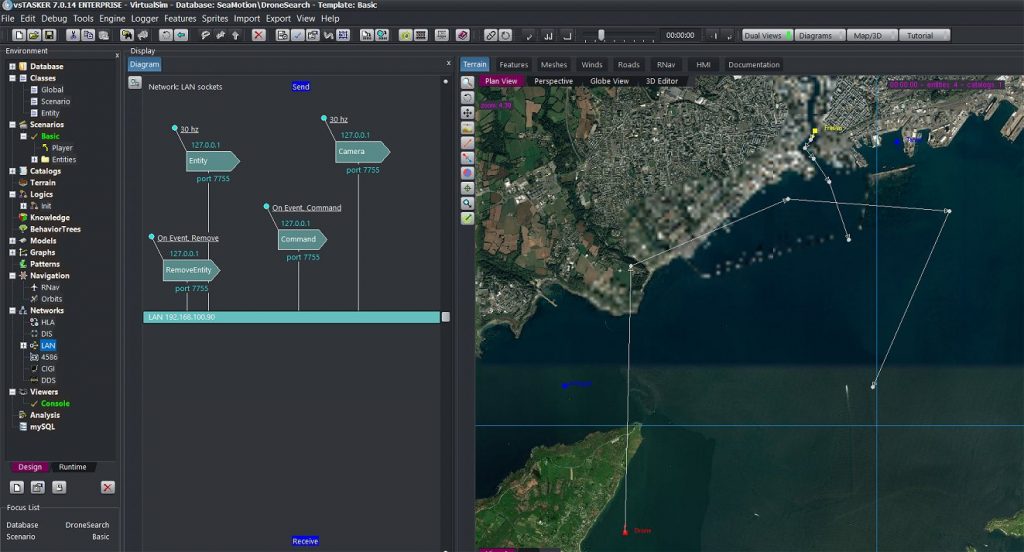
Reference image showing features of vsTASKER
Reference video showing features of vsTASKER
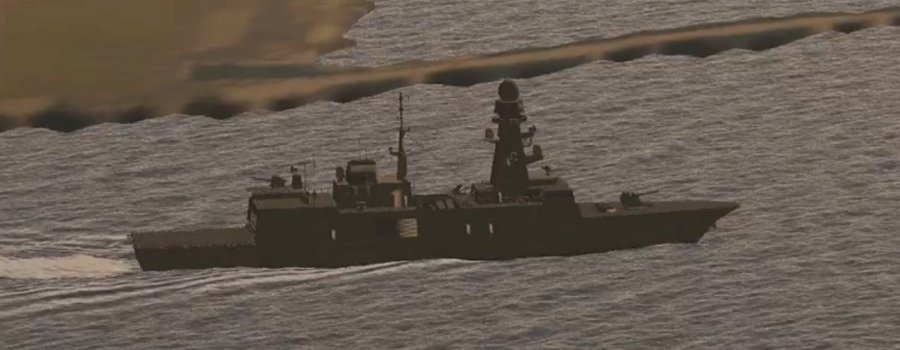
vsTASKERvsTASKER is an advanced graphical simulator and mission-management platform that handles the logic and behavior of various entities.Role: It automatically generates C++ code to create rules, AI behaviors, and physics models (like ship dynamics or sonar tracking).Function: It dictates what ships, submarines, or aircraft do in a scenario.Use Case: Creating detailed 2D operational maps, assigning mission parameters, and evaluating how autonomous vehicles navigate using sensor data.Sea Motion IntegrationSea Motion is a high-fidelity, multi-spectral image generator and marine engine.Role: It creates the visual environment.Function: It renders realistic water surfaces, waves, spray, and atmospheric effects (like electro-optical or infrared sensor views).Use Case: Providing realistic 3D visuals that allow human operators (like captains or gunners) to see the weather, wave impacts, and sea condition
Downlaod - SeaMotion Integration
Request for Trial licence
Download User Guide & reference manual
How They Work TogetherInstead of running as two separate software programs, vsTASKER links its C++ simulation engine directly into the marine simulator libraries.vsTASKER controls the strategy, enemy AI, and system mechanics.Sea Motion translates that backend data into realistic, physics-based ocean visuals for the user.Result: Operators can use the combined platform as a turnkey trainer or research tool, observing how sea states (like high waves) impact the performance of maritime vessels or weapon systems in real time.Would you like to explore how vsTASKER generates code for custom environments, or are you more interested in the visual and sensor rendering capabilities of the marine engine?